Service
Custom AI application development and AI integration
AumCreate builds web applications in which a language model works against your own data. The model turns a request into query conditions or draft text, the application reads the actual values from the database, and figures in the output are checked against the stored record before they are shown. The scope covers the whole application: accounts and permissions, business rules, the back office, usage limits, billing where the product is sold, deployment and handover.
You work directly with the developer responsible for the project. We usually reply within one business day.
When custom AI development applies
Custom development applies when the result depends on data or rules that belong to the business, and when an incorrect answer carries a cost.
- A product concept needs a first working version that can be put in front of real users.
- An existing web application or internal system needs an AI feature added while it stays in service.
- Staff read documents, spreadsheets or email attachments and re-enter the contents into another system.
- Customers describe requirements in their own words, and the catalogue is too large or too technical to browse.
- An answer has to be traceable to a record, because it informs a quotation, a specification or a compliance decision.
- Model usage has to stay within a known monthly cost, measured per account or per customer.
What we build
- AI applications, first working version
- Accounts and permissions, the business back office, the AI processing itself, file upload and job handling, per-account usage limits, subscription and payment where the product is sold, deployment and handover.
- AI features in a product already running
- Document understanding and structured extraction, retrieval over internal material, natural-language search across a catalogue, classification and matching, and drafting of business records, added to the system in use.
- Workflow automation
- Parsing of email and attachments, extraction from PDF and spreadsheet files, drafts prepared for human approval, data transferred between systems after confirmation, and a record of what each run did.
- Applications with their own business logic
- Data platforms, document processing systems, product selection and configuration, and internal tools whose rules are specific to one organisation.
Verification of model output
The structure below was built for the SEMIALT part finder, and applies where an answer has to be traceable to a record.
- The model converts a request into query conditions. Part numbers, parameters and results are read from the database by the application.
- The catalogue is not passed to the model, and the model has no direct access to it.
- Figures written by the model are checked against the stored record, and a sentence containing an unsupported figure is discarded in full.
- A record that is not found is reported as not found, and a corrected spelling is stated rather than substituted silently.
- Each request is logged with the conditions parsed and the records returned, so an answer can be examined after the fact.
- Endpoint, model name and key are back-office settings, changed without a code change or a redeployment.
Which of these apply is decided per project, in proportion to what an incorrect answer costs.
Application engineering around the model
In a production AI application, most of the work is ordinary application engineering.
- Authentication, accounts and access control
- Data model, storage, and the application’s own APIs
- Usage limits and cost ceilings for model requests, per account and in total
- Billing and subscription integration where the product is sold
- Error handling, retries, and visibility into failed runs
- Testing, deployment, and handover of source code and accounts
Approach to an AI project
- 01Define the role of the modelThe part of the task that requires a model is separated from the part that is a database query, a rule or a calculation. Work that can be done deterministically is kept out of the model.
- 02Build the data path firstThe data model, the import and the application’s own queries are built before the model is connected, so that results can be compared against a known answer.
- 03Set the cost ceiling with the designRequest volume, caching, batching and per-account limits are decided together with the feature, because they determine what the feature can be.
- 04Keep the provider replaceableEndpoint, model name and key are configuration. Prompts and response parsing are kept in one place, so that a provider or a model can be changed without a rewrite.
- 05Hand over code and accountsSource code, the deployment, the database and the relevant third-party accounts are transferred as set out in the written scope.
Examples
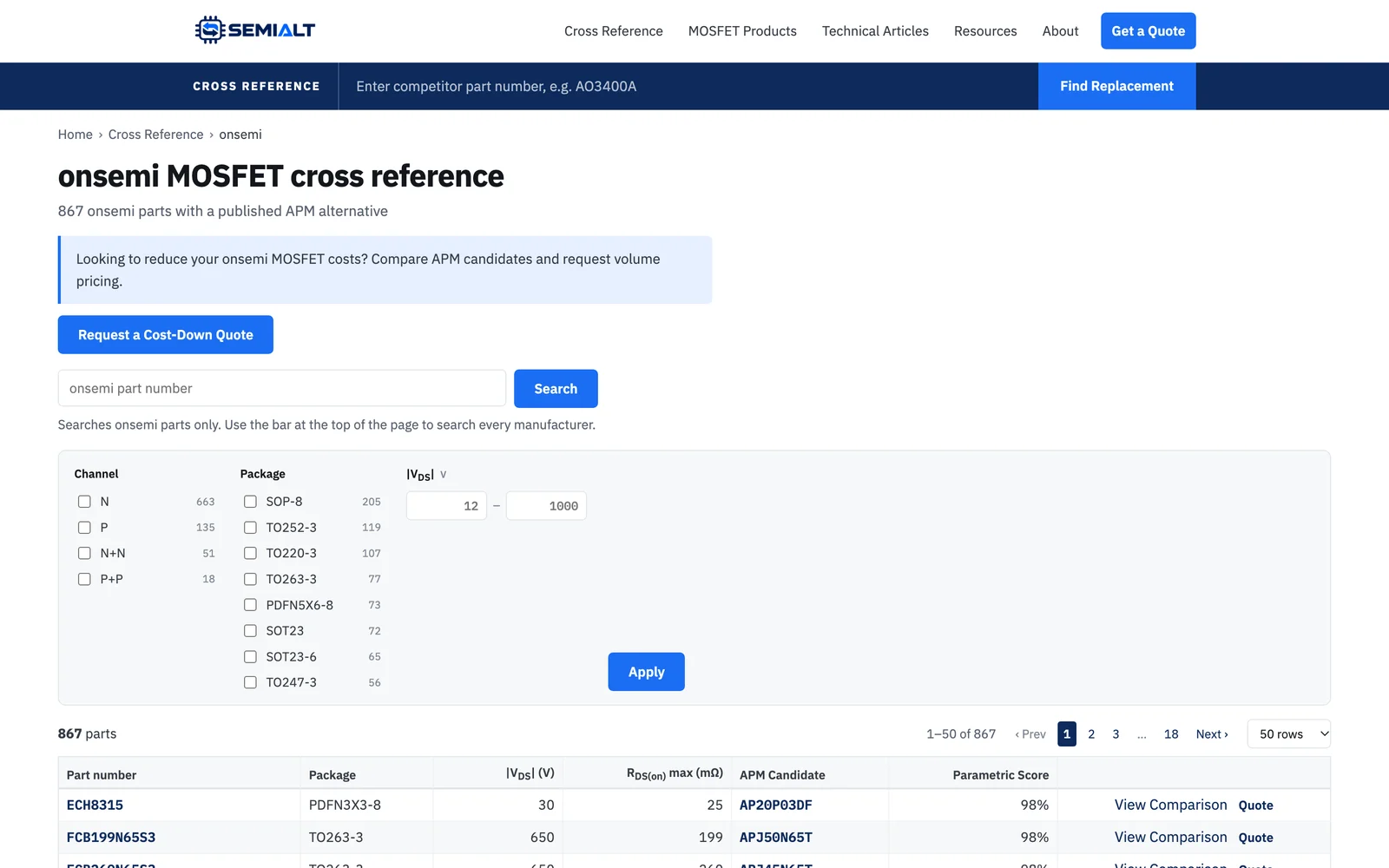
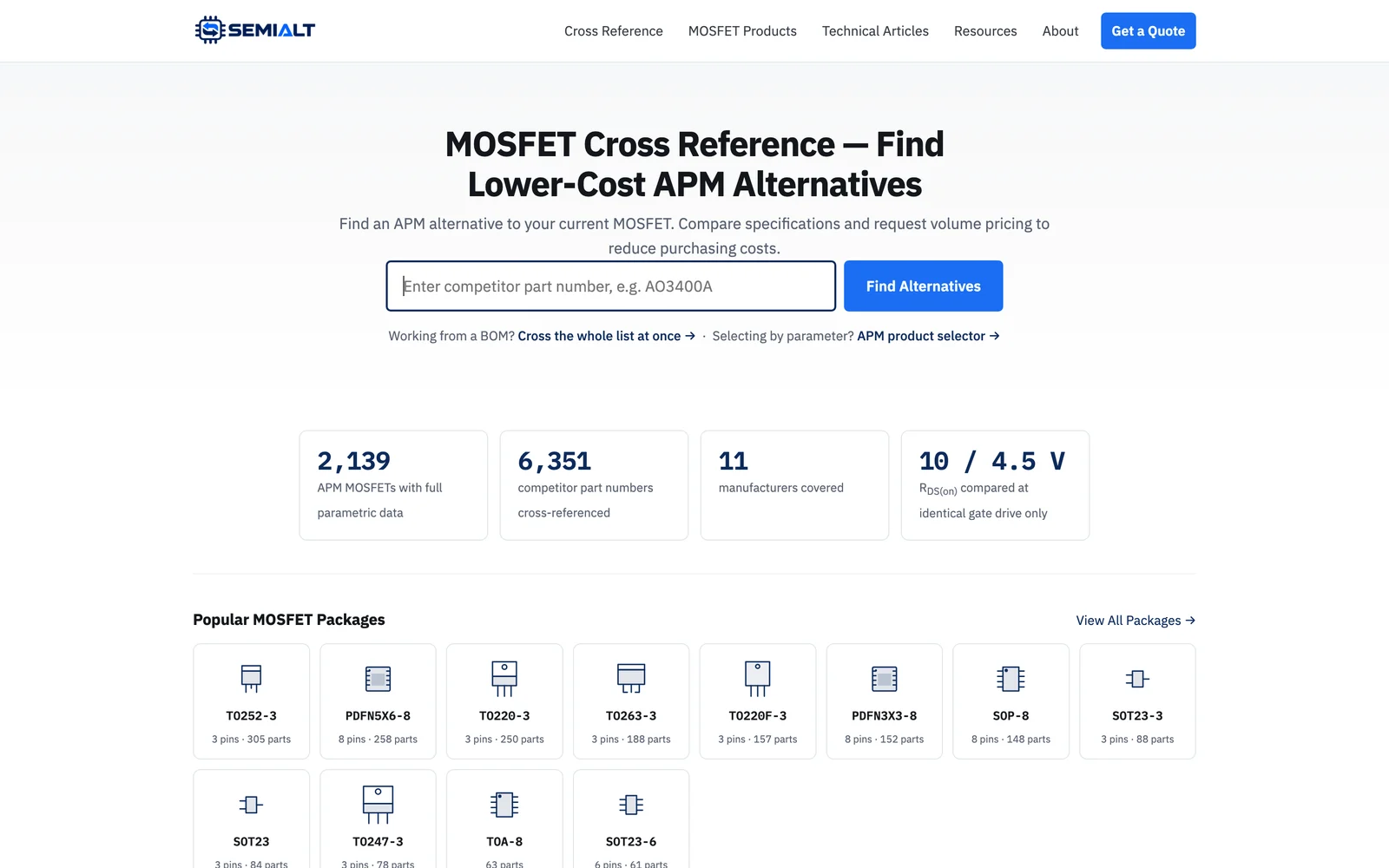
SEMIALT is a delivered client project: a MOSFET cross-reference platform on Laravel with a Filament back office, run by the client’s own staff. The natural-language finder described above was developed against its parametric data; it takes the client’s own model provider key and is not enabled on the public site. AumChat is our own product, sold with plan tiers and usage limits. This website is ours as well: accounts, a credit ledger, metered pricing per unit, model processing under tools, payment and delivery.
Client work
Working prototypes
Common questions
- Can an AI application be built from an idea?
- Yes. The first stage establishes what the application has to do, what data it holds, and which part of the task requires a model. The first version covers what is needed to put it in front of real users: accounts, the core workflow, the AI processing, and the back office.
- Can AI be added to an application that is already running?
- In most cases, without rebuilding it. We review the existing data model, APIs and deployment first, and the feature is added alongside the current functionality. Where the existing data is not structured enough to support the feature, that is established before the work is accepted.
- Does the application have to use WordPress?
- No. The technology follows the requirement. WordPress and WooCommerce apply where the project is a website with content and commerce. A standalone application is built as one: SEMIALT, described above, is a Laravel application, and this website is built on Next.js.
- Which models can be integrated?
- Any provider reachable over an HTTP API. The integrations on this website use DeepSeek; on SEMIALT, the endpoint, model name and key are back-office settings rather than a code dependency, so the provider can be changed later. Self-hosted models apply where the data cannot leave your own infrastructure.
- Who owns the code and the accounts?
- The source code, the data and the relevant account access are handed over at completion, as set out in the written scope. Where a third-party service is required, the account is registered to you wherever the provider allows it, so that billing and keys stay under your control.
- How are model usage costs handled?
- Model usage is billed by the provider against your own account, so the cost is visible to you directly. The application is built with per-account limits and a total ceiling, and the request volume of a feature is estimated before it is built.
- How much does development cost?
- Custom development is quoted once the requirements and the project boundaries are established, and there is no fixed price for this work. The enquiry form includes a budget range, which is used to decide what can be delivered in a first version and what is separated into later stages.
Project enquiry
Send the current site or the requirement, together with any examples, documents, or workflow notes that help explain it. We review the scope and may ask follow-up questions before providing a written quote.
You work directly with the developer responsible for the project. We usually reply within one business day.